


A Look into Australia's Enigmatic Past
- Nov 29, 2024
- 4 min read
Updated: Dec 2, 2024
Australia; famous for its stunning landscapes and unique wildlife, hides a history that is as intricate as its terrain. From deep-rooted traditions of hundreds of Indigenous Cultures to the waves of European settlement and the modern era, Australia’s history is complex. Here's a quick run-down:
Indigenous Heritage
Australia's Traditional People backdate their ancestry to the beginning of time. Modern technological advancements confirm Indigenous evidence that backdates 65,000 years!
People arrived to this continent during ice ages when only short boat trips were required due to much lower ocean levels. Aboriginal people spread throughout so called 'Australia'.
Aboriginal & Torres Strait Island communities had intricate social structures and practiced seasonal migrations, demonstrating an impressive understanding of the Australian environment. Oral histories passed through generations recount Creation Time stories, which highlight the connection between these peoples and the land.
Indigenous Australians went about their uncomplicated lives, spending most of their time engaged in hunting and gathering, until the late 18th century. It is estimated that about 90% of Indigenous people were displaced during colonisation, leading to profound impacts that are still felt today.
There were hundreds of Indigenous Countries that made up this continent with over 250 different languages (1000+ dialects) prior to European invasion. Indigenous Australian clan groups are referred to as a 'mob'. Each mob have their own language(s), Culture, stories & beliefs, each representing unique cultural narratives and traditions.

Indigenous Australians are the oldest surviving culture on planet Earth and are the Traditional Owners of Australia.
Today, more than half of all Indigenous Australians live in towns. Often on the outskirts in terrible conditions. Whilst they make up only 3.8% of the entire Australian population, they make up one third of our homeless population. Indigenous women (alone) make up one third of incarcerations. #blacklivesmatter #aboriginaldeathsincustody
Terra Nullius
Terra Nullius is a latin term meaning 'land belonging to nobody.' This law related to new land discoveries and how they were formally recognised by European powers. This law gave the authority to govern new territories across the world. This law ignored the existence of Aboriginal & Torres Strait Islander People(s) existence and their connection to the land.
European Exploration
The first significant European contact with Australia was made by Dutch explorer Willem Janszoon in 1606. Yet, it was Captain James Cook’s voyage in 1770 that sparked major interest. Cook landed in Botany Bay (Sydney) and observed a sparsely populated land. He noted sightings of small gatherings of local people sitting around campfires and various groups fishing. Cook and Joseph Banks (the accompanying botanist) incorrectly determined the remainder of the continent 'uninhabited', despite not traveling to remote parts of Australia. They drew conclusions assuming limited food & water.
Throughout the 18th century, explorers such as George Bass and Matthew Flinders mapped Australia’s coastlines, laying the groundwork for future colonisation.
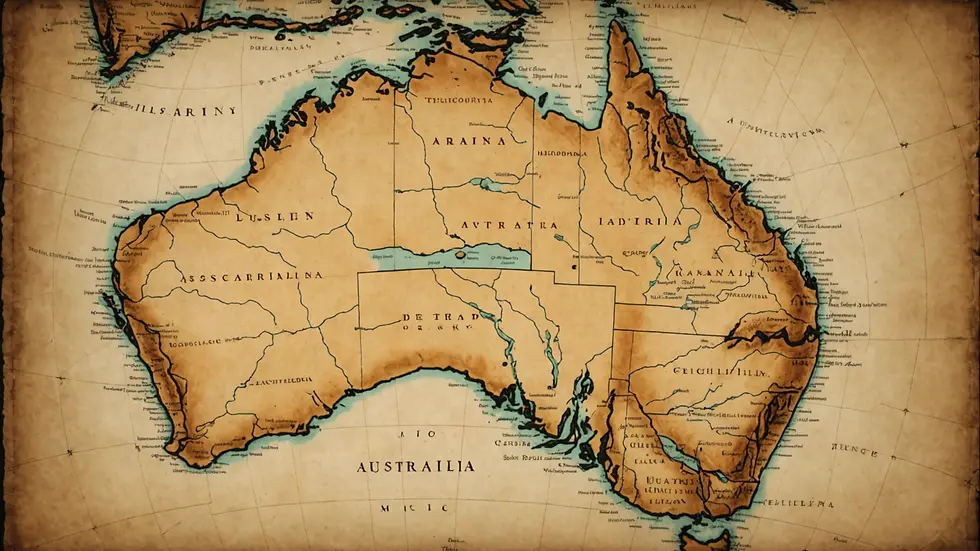
The arrival of the First Fleet in 1788 marked the beginning of Australia's colonial era. The fleet consisted of 11 British ships that brought over convicts and free settlers to Australia under the command of Captain Arthur Phillip.
Severe criminals (convicts) were sent to prisons to work sunrise to sunset in extremely poor conditions. Discipline included being whipped, chained in irons or execution. Free Settlers were people that chose to leave Britain to start a new life in Australia. They were given free land by the British Government. Non-threatening convicts worked as servants to the free settlers.
Following European arrival, up to 90% of the Indigenous population faced displacement, introduced diseases, and conflict, all of which led to a significant decline in their population.
As settlers moved further inland, tensions escalated. By the 1850s, violent confrontations erupted between settlers and Indigenous groups. This legacy persists and current efforts towards reconciliation illustrate Australia's ongoing struggle with its dark and painful history.
'Always was, always will be, Aboriginal Land.'
The Gold Rush Era
The discovery of gold in the 1850s ignited a massive influx of immigrants, reshaping Australia's demographics and economy. Gold mines attracted individuals from around the world, from Chinese labourers to European fortune seekers. This surge not only boosted economic growth but also created vibrant multicultural hubs.
Cities like Melbourne and Ballarat grew rapidly, transforming into bustling centres of commerce and culture. Estimates suggest that over 500,000 people arrived during the gold rush, contributing to a cultural mosaic that helped define contemporary Australian identity.
Federation & Nationhood
On January 1, 1901, Australia saw its six colonies unite to form the Commonwealth of Australia. This federation represented a major step towards a shared national identity and centralised government.
Federation marked Australia’s growing international presence and significant social changes. Movements for women's rights gained momentum, and policies toward immigration evolved. Notably, the Australian Constitution was amended in 1967 to include Indigenous Australians in the census, a landmark decision reflecting changing attitudes and the push for greater inclusion.
The World Wars and Australia’s International Role
Australia played a significant role in both World Wars, contributing troops and resources to the Allied forces. Over 400,000 Australians enlisted during World War I and more than 60,000 did not return. The collective experience of war forged a strong national identity.
Modern Australia and Ongoing Challenges
After World War II, Australia shifted its focus to reconstruction and embraced multiculturalism. more than 5 million people migrated to Australia in the late 20th century. Today, approximately 30% of Australians were born overseas.
Links between Britain & Australia have slowly eroded with the changes in population.
I personally suspect Australia will complete its journey to become a republic in the next decade.
Today, Australia is celebrated for its quality of life, robust economy and its natural beauty.
However, several challenges persist, particularly regarding the rights and recognition of Indigenous People(s) and the impacts of climate change.
Recent movements advocating for Indigenous rights underline the need for Australia to confront its past and create a more inclusive society. The Uluru Statement from the Heart, released in 2017, calls for constitutional recognition of Indigenous Australians, garnering widespread public support. Click here to view the statement.
Reflecting on Australia’s Journey
Australia’s history is a rich blend of ancient traditions, colonial encounters and evolving identities. The interactions between Indigenous People(s), European settlers and immigrants have significantly shaped modern Australia. Understanding this multifaceted past helps us appreciate the nation's diverse heritage.
As Australia evolves, focusing on reconciliation and acknowledging historical injustices is vital. Engaging with this history along with a commitment to inclusivity can help shape a brighter future where Australia honours its unique stories and vibrant cultures.

Comments